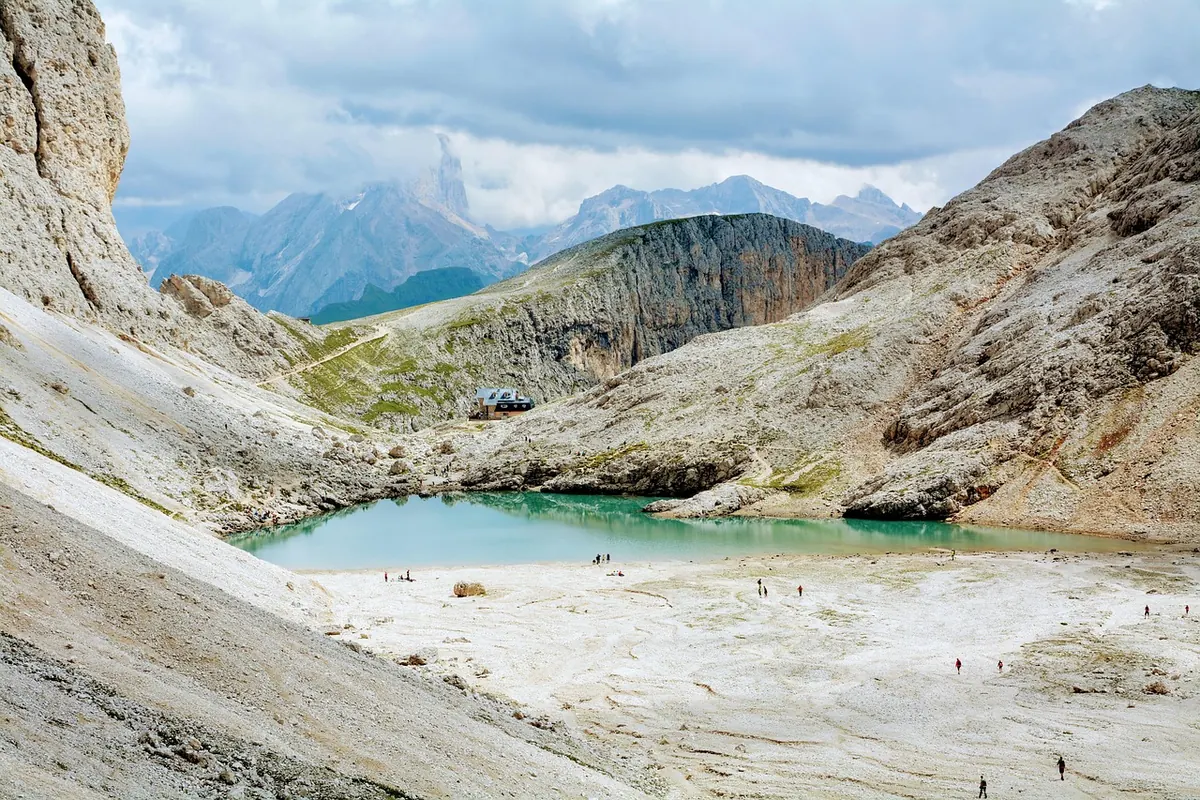
There is a moment on almost every first Dolomites traverse when the day stops being a hike and turns into something else: boots off at the door of a rifugio, a plate of pasta, the light going pink on a wall of rock you spent six hours walking toward. Hut-to-hut walking is the best way to reach that moment, and the Dolomites are unusually good at it — a dense network of staffed mountain huts, well-marked trails, and cable cars that let you trim a route without abandoning it.
The catch is planning. A multi-day trek here is a chain of small decisions, and if one link is wrong — a stage too long, a hut with no beds left, a route that disappears into a via ferrata — the whole thing wobbles. What follows is the version of the plan you want before you book anything.
Choose a route your legs can actually finish
Most beginners reach for the Alta Via 1, and that instinct is sound: it runs from Lago di Braies south toward Belluno, is waymarked clearly, and passes through a string of comfortable huts. But the full route is roughly ten days of walking and is best treated as a menu rather than a fixed package. Plenty of people walk only the northern half, or use lifts and local buses to skip a stage, and end up with a four- or five-day version that still feels like a proper journey.
There are other options worth knowing about. A short circuit around the Tre Cime di Lavaredo, using huts in the shadow of the north faces, gives you three or four days of big scenery with relatively modest daily effort. The Catinaccio and Rosengarten area above Vigo di Fassa has a similar density of huts and gentler gradients. Around Cortina, a two-night loop linking Rifugio Nuvolau, Averau and Croda da Lago works well as an introduction.
Two filters will save you time. First, decide whether your route needs technical gear. Anything labelled via ferrata means cables, a harness and a helmet, and that is a different sport from walking. Second, look at the transport ends. A one-way route is only useful if you can get back to your car or your bus stop without a taxi you cannot find.
Booking huts: the part that decides your trip
Rifugi are not campsites. They have a fixed number of beds, they are busiest in late July and August, and the popular ones fill months ahead. The practical rule is to have your entire chain of overnight stays confirmed before you leave home — not mostly confirmed, not "we'll see how we feel." Turning up at a full hut at six in the evening above 2,000 metres is a genuinely bad position to be in.
Booking happens in three main ways: an online booking system for huts that use one, email for those that don't, and a phone call when the email goes unanswered. Write in simple English or lean on Italian and German — many huts are family-run in Ladin-speaking valleys and reply in whichever language they use most. Always say how many people, which night, whether you want half board, and whether you need a private room or are fine in a dormitory. Then read the cancellation terms; they vary from generous to strict, and mountain weather is the reason they exist.
Half board — mezza pensione — usually covers dinner, bed and breakfast, and it is the sane choice on a trek. Dinner is hearty mountain food, breakfast is bread, jam, cheese and coffee. Lunch is extra, so either buy it at the hut in the morning or carry your own.
Daily distances: read the hours, not the kilometres
In the Dolomites, distance on a signpost is close to meaningless. A 9-kilometre stage with 800 metres of climbing will take far longer than a 14-kilometre valley walk. Trail signs give walking times, and those times assume steady, unspectacular pace with a light pack and a short break — they are a reasonable base.
For a first multi-day trek, aim for days of roughly four to six hours of walking, with 500 to 900 metres of ascent, and keep at least one shorter day in the middle. Terrain matters too: grassy alpine plateaus are quick, while scree slopes and rock steps slow everything down, especially in the afternoon when your legs have opinions. And accept that a hut-to-hut stage ends with the last twenty minutes being steeper than you expected. It nearly always does.
What a typical day looks like
Up at seven, breakfast, on the trail by eight. Walk for two hours, stop for a snack and a look at the view, walk for another two, then lunch — either at the next hut or on a sunny rock. Arrive at your overnight hut by mid-afternoon, shower if there is one, and spend the rest of the day reading, drinking coffee and watching the light change. Asleep by ten, because everyone else is.
On the trail: waymarks, weather and water
Routes are marked with red-and-white paint on rocks and trees, plus numbered signs that give destinations and times. Italian, German and Ladin names often appear side by side, so Rifugio Locatelli and Dreizinnenhütte are the same building. Keep a map or an offline route on your phone — waymarks occasionally hide behind a bush or under snow, and a junction you misread can cost you an hour.
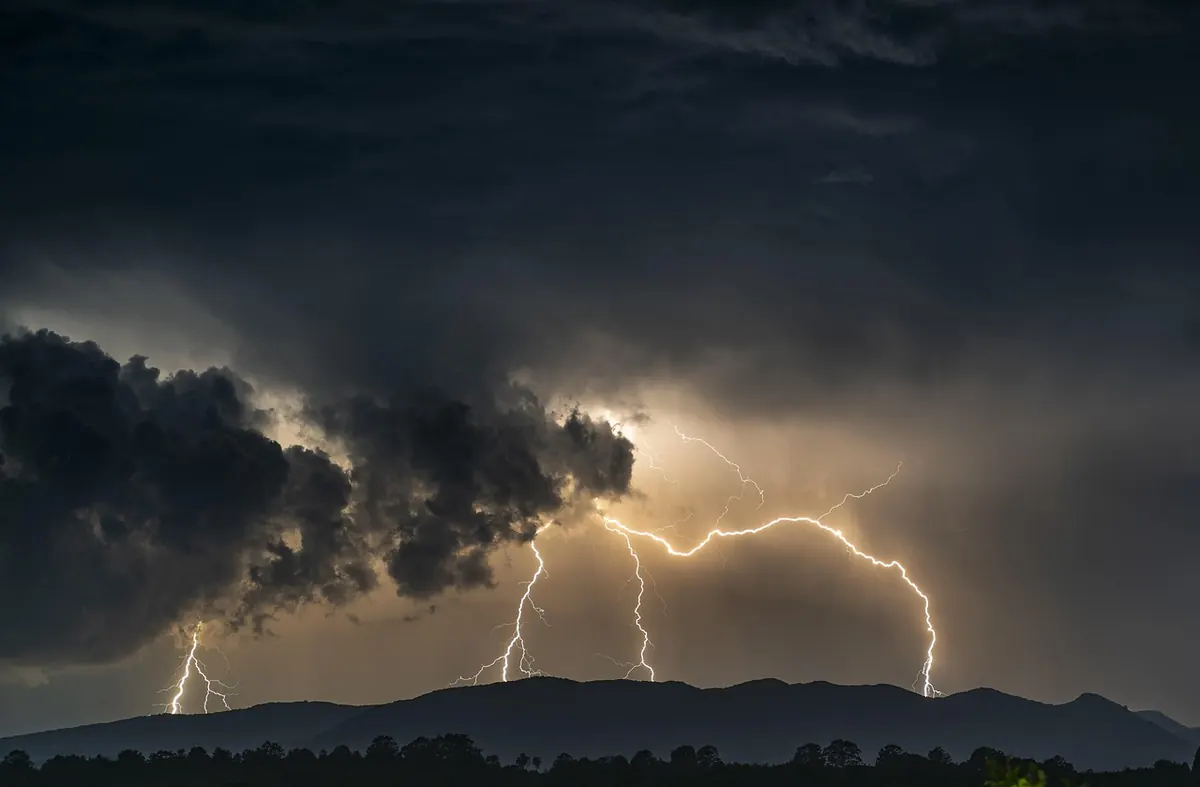
Summer afternoons in the Dolomites build clouds and then storms. Start early, plan to be at or near your hut by mid-afternoon, and be willing to turn around if the sky darkens and the thunder starts. Carry a light waterproof shell even in a heatwave, plus a warm layer: at 2,400 metres, the temperature after a shower drops fast. Water is available at huts and at many fountains, but not reliably on ridges, so carry 1.5 to 2 litres and refill when you can.
Pack light, sleep early, carry cash
- Boots you have already worn for several long days, plus blister plasters.
- A sleeping bag liner. Huts supply blankets; the liner is what most expect you to bring.
- Earplugs and a small headtorch. Dormitories are dormitories.
- Cash in euros. Some huts take cards, many prefer cash, and there is no ATM on the ridge.
- A refillable bottle, sun cream, a hat and a warm mid-layer.
- A light pack, ideally under about 8 kilograms. Every gram argues with you on the fourth climb.
Hut etiquette is simple and universally appreciated: boots off at the entrance, quiet after ten, no drones, and a smile for the family who carried your dinner up the mountain. Check whether your travel insurance covers mountain rescue and walking at altitude; rescue in the Dolomites is efficient but not free, and it is worth confirming the details with your insurer rather than assuming.
Before you go: a short checklist
- Pick a route of four to six days with a short day in the middle, and confirm the start and finish are reachable by public transport or a pre-booked transfer.
- Book every hut, keep the confirmations offline, and note the cancellation deadlines.
- Write down the walking times stage by stage and check them against your normal pace on a training walk with a loaded pack.
- Read the weather forecast the morning you leave and have a lower, shorter alternative for each stage.
- Tell someone at home your route and expected hut each night.
- Save the European emergency number, 112, and keep your phone charged with a power bank.
The Dolomites reward a modest plan executed well far more than an ambitious one you abandon at the second pass. Four days, three huts, and one long lunch in the sun will teach you more than a fortnight of second-guessing. Book it, walk it, and next summer you will be the one explaining to a nervous first-timer why the last twenty minutes are always steep.
Photo: pcdazero / Pixabay